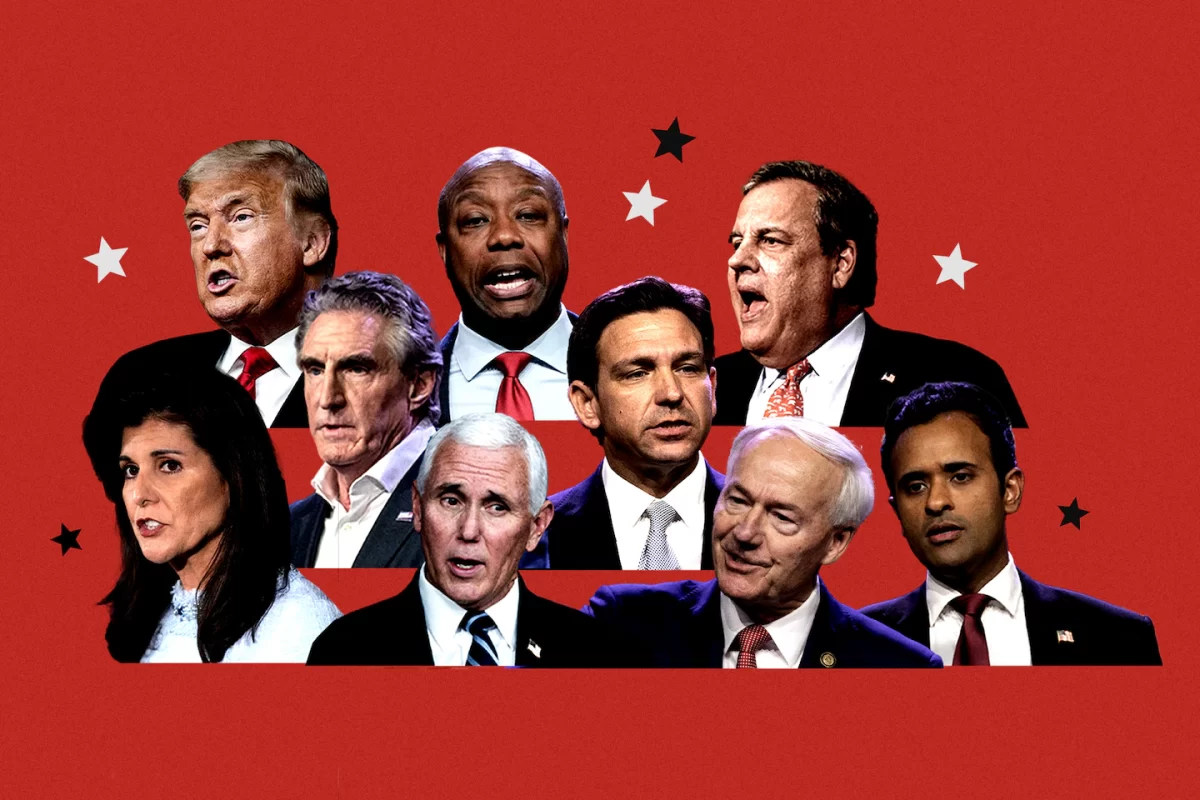
The Republican primary GOP debates are happening in preparation for next year. The first one was relatively recent with many candidates in the running. For example, North Dakota Gov. Doug Burgum, former New Jersey Gov. Chris Christie, Florida Gov. Ron DeSantis, former U.N. Ambassador Nikki Haley, former Vice President Mike Pence, entrepreneur Vivek Ramaswamy, and Sen. Tim Scott, R-S.C., have all qualified for the second debate Wednesday at the Ronald Reagan Presidential Library in California. All of these candidates have some experience with politics and money making them all qualified candidates. In addition, Donald J. Trump was supposed to be there but decided to entirely miss the debate as he saw it was “pointless” and was in the process of fighting criminal charges. As of now, it seems that Donald Trump is the favorite of the Republican party, but we have no clear idea. At this point, only educated guesses could be made. Chris Christie and Donald Trump seem to me to be the best options currently, but I can see Haley or Ramswamey winning as well. All of these candidates are qualified and all can win the pick for the Republican party.
GOP Debate & Republican Candidate Update
More to Discover





John Aydin • Jan 30, 2024 at 8:46 am
The ongoing GOP primary debates are a critical stage in shaping the Republican landscape for the upcoming election, and Solomon Gilder’s update provides a snapshot of the diverse candidates involved. The inclusion of seasoned politicians like Chris Christie and Ron DeSantis, alongside newcomers like Vivek Ramaswamy, demonstrates a wide spectrum of experiences within the party. The qualification criterion, as mentioned by Gilder, revolves around political experience and financial success. While these are undoubtedly crucial aspects, it’s essential to emphasize the significance of policy proposals, leadership qualities, and the ability to address pressing national issues in determining the most suitable candidate.
The absence of Donald Trump from the debate and his characterization of it as “pointless” due to his legal challenges raises questions about the commitment to the democratic process within the party. It prompts voters to consider not only a candidate’s political experience and financial success but also their respect for established democratic norms. Additionally, Gilder’s assertion that Trump is currently the favorite within the party highlights the enduring influence of the former president. However, this calls for a deeper exploration of the ideological direction the party wishes to take, considering the diverse field of candidates.
Gilder’s personal preference for Chris Christie and Donald Trump as the best options adds a subjective element to the analysis. While personal opinions have their place, a more in-depth exploration of each candidate’s policy positions, their ability to connect with voters, and their potential to unify the Republican party would contribute to a more comprehensive and informed perspective. As the GOP primary unfolds, voters should be encouraged to critically assess the candidates beyond their qualifications, considering their vision for the future and their capacity to navigate the challenges facing the nation.
John Aydin • Oct 13, 2023 at 10:19 am
While the Republican primary debates showcase a diverse field of candidates, it’s essential to consider why Donald Trump and Chris Christie may face significant obstacles in winning the role of president. Donald Trump chose to miss the debate due to ongoing legal challenges. These challenges could weigh heavily on his campaign and erode his appeal among voters who might prefer a candidate without legal entanglements. It’s essential for a presidential candidate to be free from legal distractions, and Trump’s current situation raises concerns about his ability to focus on the needs of the country. Donald Trump’s presidency was marked by a polarizing approach to governance. While he may still be popular within the Republican base, many Americans remain divided on his leadership style and policies. His candidacy could exacerbate these divisions, making it difficult to build a broad coalition necessary for a successful presidential campaign. On the other hand, Chris Christie, while experienced, carries baggage from his tenure as New Jersey’s governor. His approval ratings plummeted during his time in office, and his involvement in the Bridgegate scandal continues to cast a shadow over his political career. This could make it challenging for him to garner the necessary support from voters, especially in a general election. The article rightly points out that there are other qualified candidates, such as Nikki Haley and Vivek Ramaswamy, who could present more appealing and less divisive options to the Republican party. As voters evaluate their choices, they may find that these alternatives offer more unifying and forward-looking approaches to governance.
The political landscape is dynamic, and the preferences of voters evolve over time. What worked in the past may not necessarily work in the future. Donald Trump and Chris Christie may find it challenging to adapt to the changing priorities and concerns of voters, especially as new issues come to the forefront.