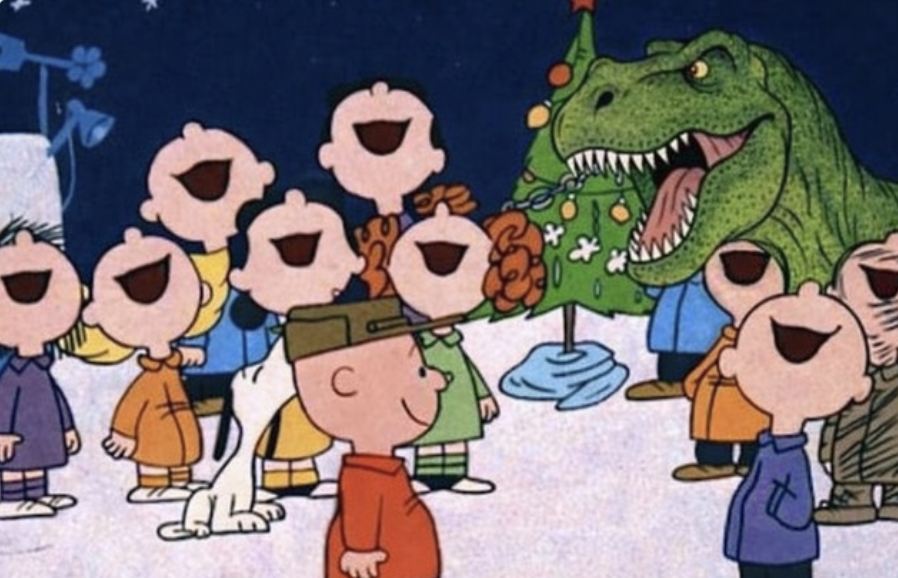
Every December, we sing the same catchy Christmas carols without a second thought about the words coming out of our mouths. Every year it’s, “deck the halls,” but what does that even mean? What if I told you that Christmas carols are full of words that went extinct centuries ago, words that nobody has used in English for hundreds of years.
Fossil words are words that were commonly used long ago, but have since then disappeared from modern-day speech. How do they survive? Take the infamous song “Deck the Halls.” You probably never stopped and wondered how one “trolls the ancient yuletide carol,” but you were, in fact, unknowingly giving fossil words a second life. For a moment, you’re in the shoes of people from hundreds of years ago, and suddenly, your living room isn’t just filled with holiday cheer; it’s filled with a continuation of English history. Every year, we echo the voices and expressions of the long past and we become part of a centuries-old tradition, preserving archaic words that began the Christmas we know and love.
What are some examples of these history-packed words? To circle back to our quote, “troll the ancient yuletide carol,” both the words “troll” and “yuletide” are almost never used in present-day conversation. “Yuletide” is similar to “the Christmas season”; the term came from a yule log that would be traditionally burned during the Winter Solstice, and “tide,” which was another way of saying season. As for “troll,” it was simply singing passionately. However, if I didn’t spend time searching for “24-hour Instrumental Christmas Music” on YouTube, I would have never stumbled across the setting of a yule log burning, and would’ve just assumed it was the dessert. And when we’re “decking the halls,” we’re really saying “decorate with the branches of trees”; however, the meaning has now expanded, encompassing all sorts of Christmas decorations.
In the end, Christmas carols aren’t just background noise or a catchy tune; they’re time capsules. Even if we don’t completely understand their meanings, we still allow these words to live on. Language doesn’t disappear—sometimes it just waits for December, hiding in songs we’ve been singing all along.